
How to Check Criminal History in Craven County
Start with the North Carolina eCourts Portal when a name, citation, or case number is known. Choose Smart Search, enter the best identifier, and narrow the location to Craven County. Add the criminal or infraction category and a filed-date range when a common name returns too many cases. Portal results can orient a search, but they are not certified criminal history reports. The Clerk of Superior Court is the source for the official file, paid copies, and the statewide clerk check.
One search rarely answers every question. A court case shows prosecution and outcome. Active Bookings shows present county custody. A police or sheriff report explains the reported event and arrest facts that the law makes public. NCDAC covers state prison and community supervision, while SBI Right to Review lets a person inspect their own fingerprint-supported state history. Follow the record from its creator to its final custodian.
- Search eCourts by a full name or exact case number, then filter the result to Craven County.
- Compare the case number, filing date, charge, and available identifiers before accepting a match.
- Ask the Craven clerk for the underlying case file or a certified court-record check when proof is needed.
- Check Active Bookings or NCDAC separately when the question is current custody or state supervision.
- Request incident or arrest facts from the sheriff, New Bern, Havelock, or Trent Woods police office that made the record.
Craven County eCourts Record Search
Craven County joined Enterprise Justice and eCourts on February 3, 2025. That conversion matters. Newer cases tend to carry more remote detail, while an older file may still require a clerk terminal or paper-file request. The Portal became statewide on October 13, 2025, so the county filter is vital when the same name appears elsewhere in North Carolina. It can also search by record number, citation number, attorney, business name, cross-reference number, or nickname where the interface supports those fields.
| Portal field | How to use it | Limit |
|---|---|---|
| Search Criteria | Enter a party name or record number | A name alone is not unique |
| County / Location | Select Craven | Leave blank only for a statewide view |
| Case Category | Choose criminal or infraction | Labels may change with Portal releases |
| Filed Dates | Set a useful date span | Older paper detail may be absent |
| Search Hearings | Use a case, party, lawyer, judge, or courtroom | A hearing entry is not a disposition |
The official Craven County court hub shows the local court services that support the statewide system.
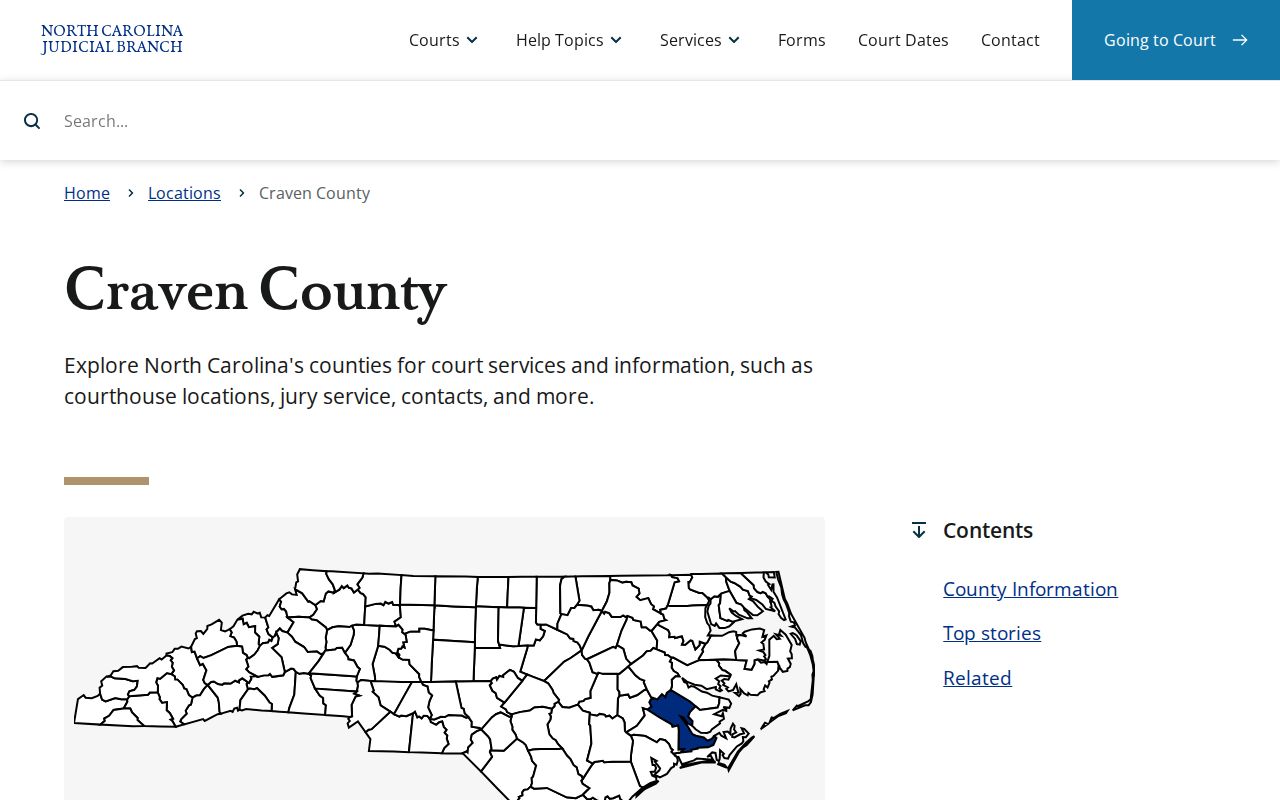
It links the remote record search back to local calendars, forms, and the clerk who controls official copies.
Official North Carolina Background Checks
North Carolina does not offer a general-public SBI name-search product. For an ordinary official court check, request a certified statewide criminal-record search from the Clerk of Superior Court. The published clerk fee is $25. Portal browsing is free, but the Judicial Branch says Portal should not be used as a criminal background check. That difference is easy to miss: free case research may reveal a docket, while the clerk product is the formal court-record search.
A person who wants their own fingerprint-supported North Carolina record can use NCSBI Right to Review. The submission requires the application, a full fingerprint card, and a $14 certified check or money order. Craven County's FY2027 schedule lists sheriff fingerprinting at $10. The FBI Identity History Summary is a separate, subject-only national route with an $18 federal fee.
| Official route | Fee | What it answers |
|---|---|---|
| Craven clerk check | $25 | Statewide court-record search |
| Sheriff fingerprints | $10 | Fingerprint-taking service |
| SBI Right to Review | $14 | Your own fingerprint-supported NC history |
| FBI Identity History Summary | $18 | Your own federal identity history |
| eCourts browsing | $0 | Informational case research |
The NCSBI personal-review source sets out the current subject-only process.
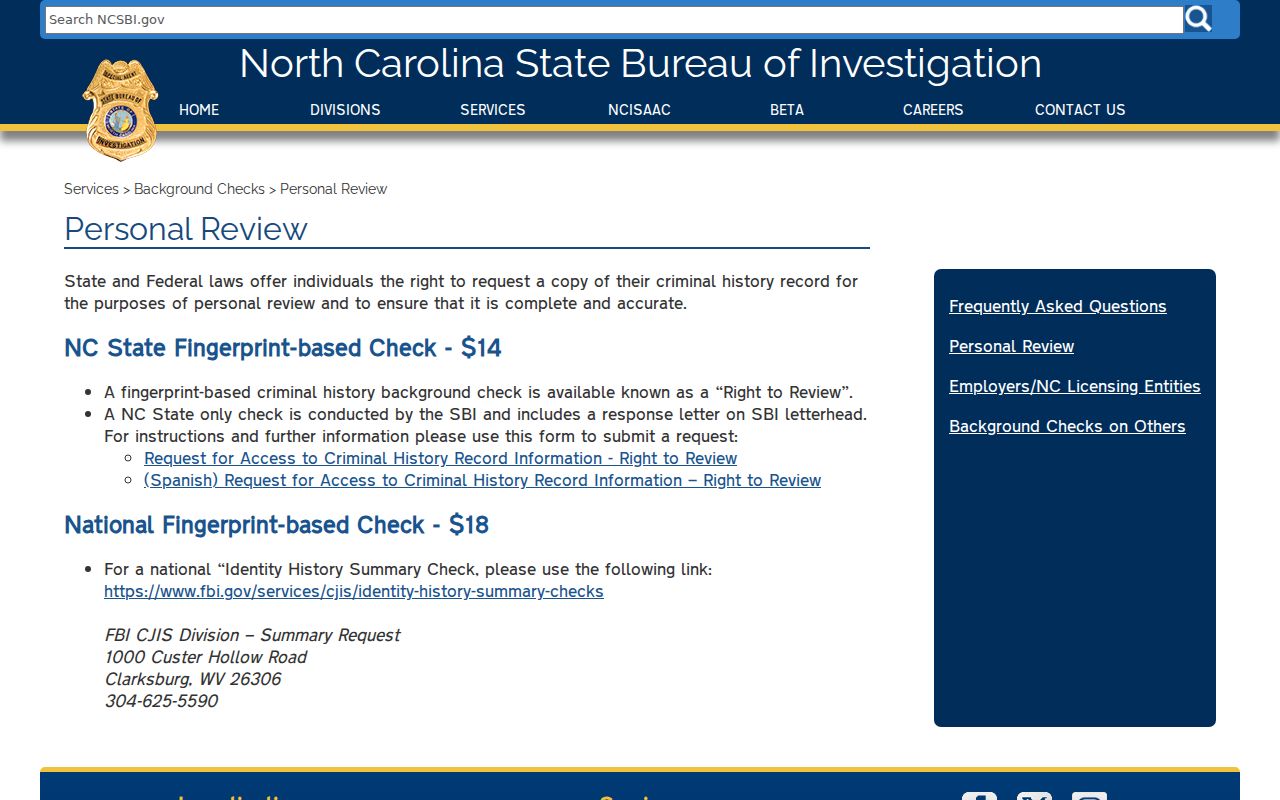
This state route is the proper place to challenge an entry in one's own SBI history through the written-exception process.
Craven County Criminal Record Offices
Two New Bern addresses divide much of Craven County record work. The Clerk of Superior Court is at 302 Broad Street, New Bern, NC 28560, and keeps District Court misdemeanor files and Superior Court felony files. The courthouse is open from 8:00 a.m. to 5:00 p.m. weekdays; its main number is 252-639-3000. Public terminals can search by defendant, case number, or victim and witness name. The sheriff and detention complex at 1100 Clarks Road holds booking administration, fingerprints, sheriff reports, and current jail functions.
The District Attorney at 310 Broad Street makes charging decisions but does not keep the complete public docket. City reports also stay with the police agency that created them. This separation helps prevent a wasted trip to the jail for a final disposition or to the clerk for an investigative narrative.
Clerk of Superior Court
302 Broad Street
New Bern, NC 28560
252-639-3000
8:00 a.m. to 5:00 p.m. weekdays
Sheriff and Detention
1100 Clarks Road
New Bern, NC 28562
252-636-6620
Jail information: 252-636-6619
District Attorney
310 Broad Street
New Bern, NC 28560
252-639-3010
Prosecutorial District 4
The official Sheriff's Office source anchors the Clarks Road contact route.
Its county role covers sheriff-created reports, fingerprints, court security, and the detention channel, not every city police report.
Types of Criminal Records
Craven County criminal records are created in stages. An arresting agency writes an event or arrest report. The detention staff then creates a booking entry and takes fingerprints when required. A prosecutor selects the charges that move forward, and the clerk opens the case in Odyssey. Later entries show hearings, pleas, dismissal, judgment, sentence, and court costs. Fingerprint-supported arrest and disposition data may also reach the SBI Computerized Criminal History program.
Each record has a different use and custodian. The North Carolina Sex Offender and Public Protection Registry is another distinct record. County sheriffs verify registrations, and SBI runs the statewide public database. It is not a list of every sex offense, and fingerprint comparison is needed for positive identity. Craven County search modes, profile fields, duration rules, and lawful-use limits are covered in the official registry search overview. No single database replaces the rest.
- Incident and arrest reports describe the event and are held by the agency that investigated it.
- Booking records show intake and current county custody through the detention system.
- Court case files show filed charges, court events, disposition, and sentence through the clerk.
- Fingerprint history joins supported arrest cycles to reported results in the SBI repository.
- Supervision and registry records address NCDAC status or a distinct statutory registration duty.
The Craven County government entry point helps identify the county department that owns a local record.
That department map matters because court, jail, sheriff, and city records are not held at one counter.
Craven County Custody Records
Craven Active Bookings is a current custody list, not a conviction list. It covers people housed at the county detention center, excludes juveniles and federal inmates, and is updated as often as possible. An absent name can mean release, transfer, a recent move, an excluded custody type, or a spelling mismatch. Call the jail information line at 252-636-6619 when timing is close or the person's custody setting is unclear.
State and federal custody use separate systems. NCDAC Public Offender Search may show people serving or formerly serving state prison terms and those on probation, parole, or post-release supervision. The Federal Bureau of Prisons locator covers federal custody. A federal prosecution in New Bern will not appear as a state Craven County case merely because the courthouse is local.
The NCDAC Public Offender Search provides the state prison and supervision layer.
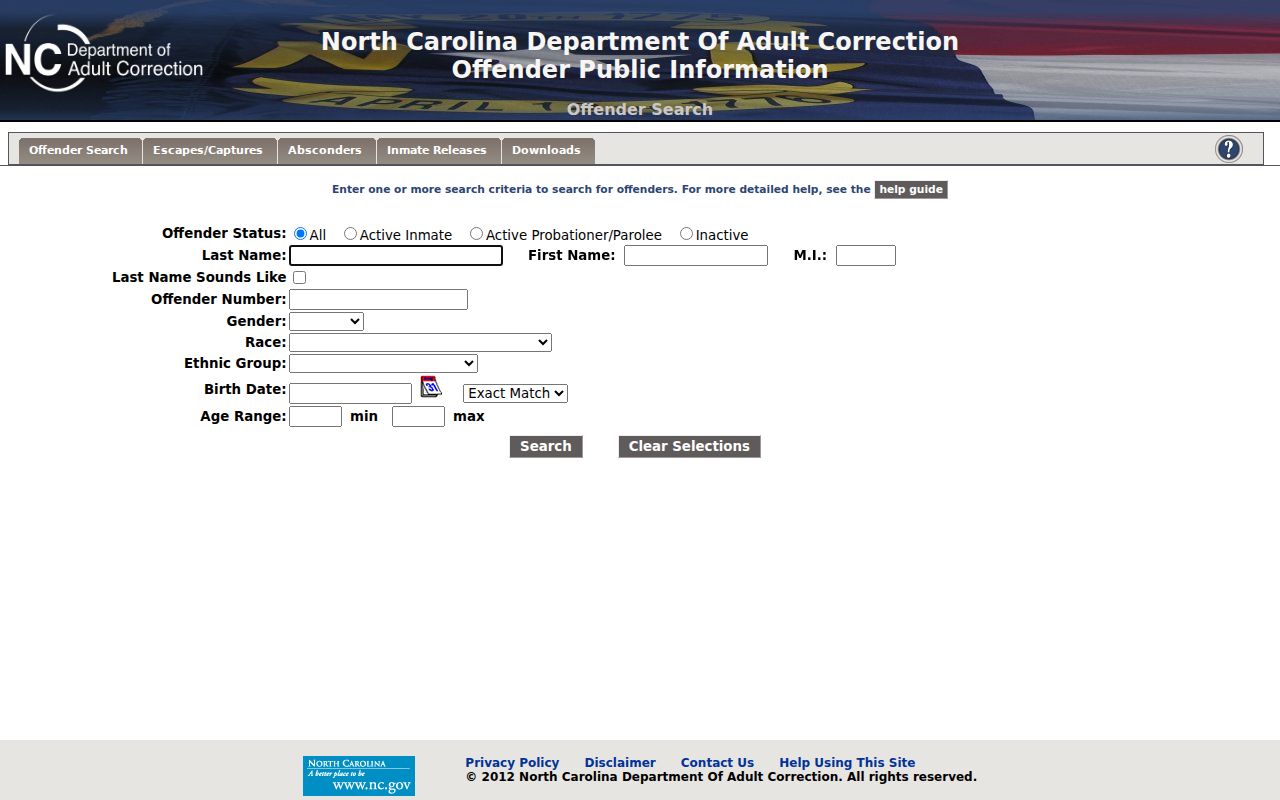
Its status fields should be checked against the Craven court judgment when the exact sentence or court order matters.
What a Craven County Criminal Record Shows
A complete record can connect identity details, event data, charges, court results, and custody status, but every source displays only its own part. Compare the case number, county, charge, filed date, and disposition before deciding two entries refer to the same matter. Names alone are weak identifiers. A charge also may change after prosecutor review, so the final court disposition carries more weight than the first booking label.
| Name and Identifiers | Full name, aliases, birth data, and available physical or agency identifiers |
|---|---|
| Arrest / Booking Data | Agency, event or booking number, dates, alleged charge, bond, and release status |
| Charges and Statutes | Filed count, offense description, classification, and cited North Carolina law |
| Disposition | Dismissal, plea, verdict, or other recorded result for each count |
| Sentence | Confinement, probation, costs, and other terms entered by the court |
| Custody / Supervision | County housing, state prison, probation, parole, or post-release status where public |
Plain terms help when reading a Craven County file. A disposition is the recorded result of a charge. An arraignment is the stage at which a plea is addressed. Bond sets conditions for release while a matter is pending. North Carolina felonies run from Class A through I and are heard for trial in Superior Court. Misdemeanors run from Class A1 through Class 3 and are tried in District Court. The charge class alone does not predict a sentence because prior-record level and the final judgment also matter. An expunction is a court-authorized removal process under a qualifying North Carolina statute.
The official Craven County Courthouse page identifies the office that maintains the case record.
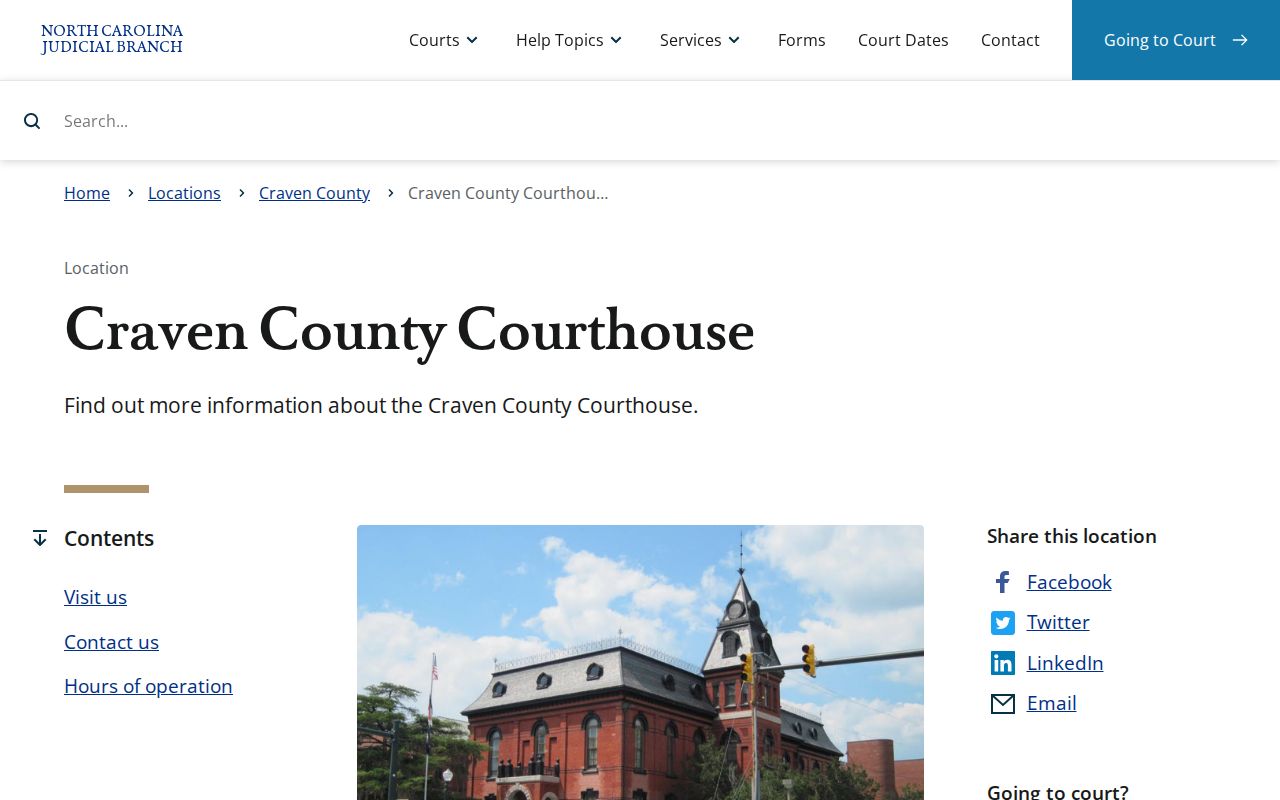
The historic Broad Street courthouse still serves as the modern clerk destination for file review and official copies.
Craven County Warrant Records
Craven County has no verified official public active-warrant name-search portal. Use a direct chain instead. Call the sheriff at 252-636-6620 and ask how to confirm one's own active process safely. Search the linked court matter in eCourts for a failure-to-appear, order-for-arrest, or process event, then give the case number to the clerk at 252-639-3000. Portal information can lag or omit sealed or unserved process, so law enforcement or judicial confirmation is the authority.
A warrant authorizes an arrest, an order for arrest can follow a missed court appearance, and a search warrant authorizes a defined search. Returned warrant facts may be reached through a focused Chapter 132 request, but sealed affidavits, juvenile material, and some unserved process remain restricted. Resolve a possible warrant through the clerk, magistrate, sheriff, or licensed counsel. Do not try to test it through an avoidable encounter.
Note: A Portal event can signal a warrant issue, but it cannot replace direct confirmation from the office that controls the process.
Public Access Laws
The North Carolina Public Records Law begins with a broad public-record definition, yet criminal investigations have specific limits. G.S. 132-1.4 makes core facts public, including the reported time, date, place, and nature of an event, plus listed arrest facts and alleged violations. It does not make the whole investigative file public. Witness material, surveillance, lab work, strategy, and protected identifying data may be withheld. A narrow request for the public incident or arrest portion is more useful than asking for every item tied to a person.
Key Statutes:
Chapter 132 establishes North Carolina's public-record framework and access duties.
G.S. 132-1 defines records made or received in public business.
G.S. 132-1.4 separates listed public arrest facts from restricted criminal-investigation material.
North Carolina sets no universal ten-business-day response deadline. G.S. 132-6 instead calls for inspection at reasonable times and copies as promptly as possible. Give the agency a report number, date and place, record type, and preferred format. Ask the custodian to identify the legal basis for any denial and whether the public portion can be separated and released.
Craven County Criminal Report Routes
Send a report request to the agency that created the file. The Craven sheriff handles sheriff investigations and unincorporated areas. New Bern police records begin at 601 George Street, with a nonemergency number of 252-633-2020. Havelock's Records Division uses its front-lobby window at 2 Governmental Avenue, runs from 9:00 a.m. to 5:30 p.m. weekdays, and lists a direct line of 252-463-7102. Trent Woods requests begin with the town police page and current Town Hall contact.
| Record channel | Best answer | Key limit |
|---|---|---|
| Sheriff or city police | Incident and arrest facts | Full investigation may be restricted |
| Craven clerk | Case, judgment, and certified copies | Does not hold the police narrative |
| Active Bookings | Present county custody | Not historic and not proof of guilt |
| SBI Right to Review | Your fingerprint-supported state history | Subject-only process |
Havelock escorts prisoners to the Craven County Judicial Center. That means the city police report stays in Havelock, custody appears at Craven, and prosecution moves into the clerk's court system. The same creator-first rule applies across the county. A requester should include the incident number if known, the date and place, the kind of report, and the requested delivery form.
Sealed, Expunged & Restricted
Expunction is North Carolina's statutory term for removing an eligible record through a court process. Chapter 15A, Article 5 contains several paths. Some dismissals and not-guilty outcomes may qualify for automatic action under G.S. 15A-146, while conviction relief under G.S. 15A-145.5 depends on the offense, prior history, and waiting period. Juvenile, sealed, confidential, and expunged material does not appear in an ordinary public search.
For a Craven filing, identify the exact charge and result, obtain a certified disposition when needed, choose the matching AOC form, and file with the Clerk of Superior Court. A petition may move through SBI and agency checks, prosecutor notice, and judicial review. A dismissal may disappear from the court system yet leave an old booking reference elsewhere until the legal removal process reaches each custodian. A person disputing their own SBI entry should use Right to Review and submit clerk proof through the written-exception channel.
G.S. 15A-145.5 provides the controlling eligibility rules for covered conviction expunctions.
Craven County Supervision Records
Probation and parole are state-run in North Carolina. Craven County does not operate a separate county probation department. The NCDAC Division of Community Supervision uses field offices, while the Post-Release Supervision and Parole Commission makes decisions within its authority. Public Offender Search may show a current or prior status, offender number, conviction, sentence, prison location, and supervision information.
A Craven court judgment is the better source for what the judge ordered. NCDAC is the better source for current state supervision status. Neither public view contains every condition, treatment detail, victim-protected fact, or officer note. Structured Sentencing also means post-release supervision is not simply the same thing as old-style parole.
The NCDAC Community Supervision source explains the statewide field structure.
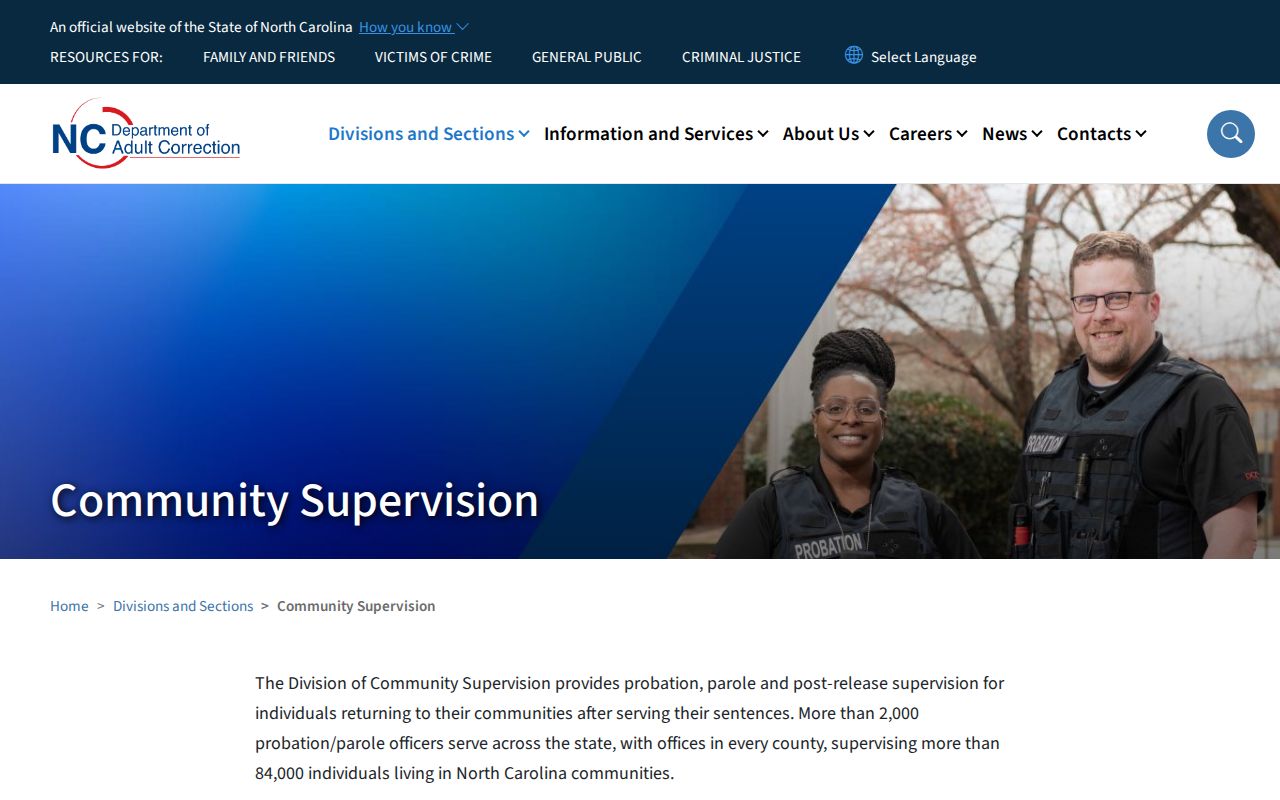
That structure explains why supervision verification belongs with NCDAC even when the judgment began in the Craven County courts.
Criminal Records by City in Craven County
City police agencies keep the event reports they create, while booked people move into Craven County detention and charges move into the unified state courts. New Bern, Havelock, and Trent Woods therefore have distinct local starting points. New Bern is the county seat and the center for court, sheriff, state, and federal record offices. Havelock has a staffed police records window and a clear prisoner-routing practice. Trent Woods maintains its own town police channel but no separate criminal court database.
New Bern Criminal History
34,724 residents · City police reports, Craven courts, and county detention
Havelock Criminal History
17,430 residents · Police records window and Craven County booking route
Trent Woods Criminal History
About 4,100 residents · Town police reports and unified county courts
Use the city office for its report, then match the case to Craven County court and custody records. This avoids asking one custodian for a document another agency owns.
Craven County Federal Criminal Records
MCAS Cherry Point adds a federal layer to record research in southern Craven County. Depending on the place and alleged offense, Havelock police, military law enforcement, federal authorities, or state courts may hold different parts of an event. The U.S. Courthouse at 413 Middle Street in New Bern serves the Eastern District of North Carolina, but federal dockets do not move through the state eCourts Portal. PACER is the federal docket route, and the Bureau of Prisons locator is the federal custody route. The official New Bern federal courthouse source identifies the local federal court office.
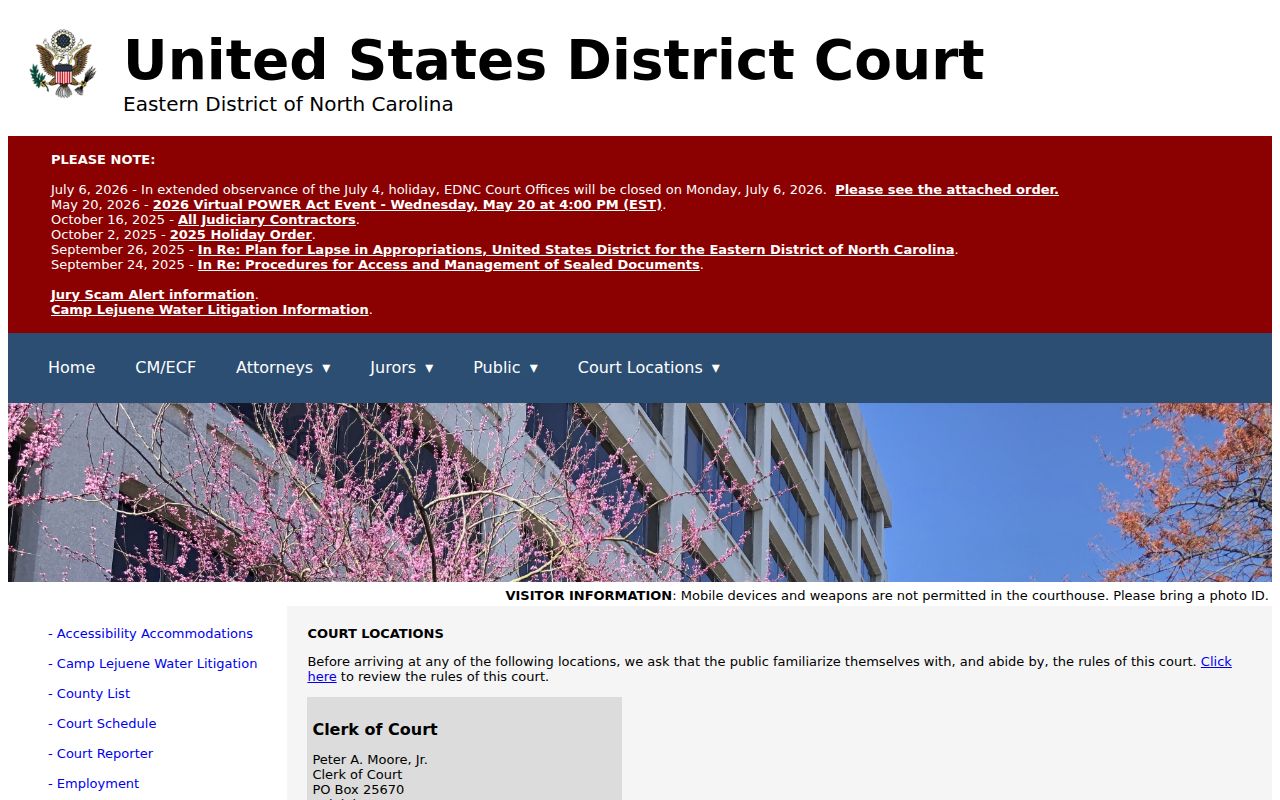
Its Middle Street location is close to the county courthouse, yet the two buildings serve wholly different docket systems. The Federal Bureau of Prisons inmate locator provides the matching federal custody channel.
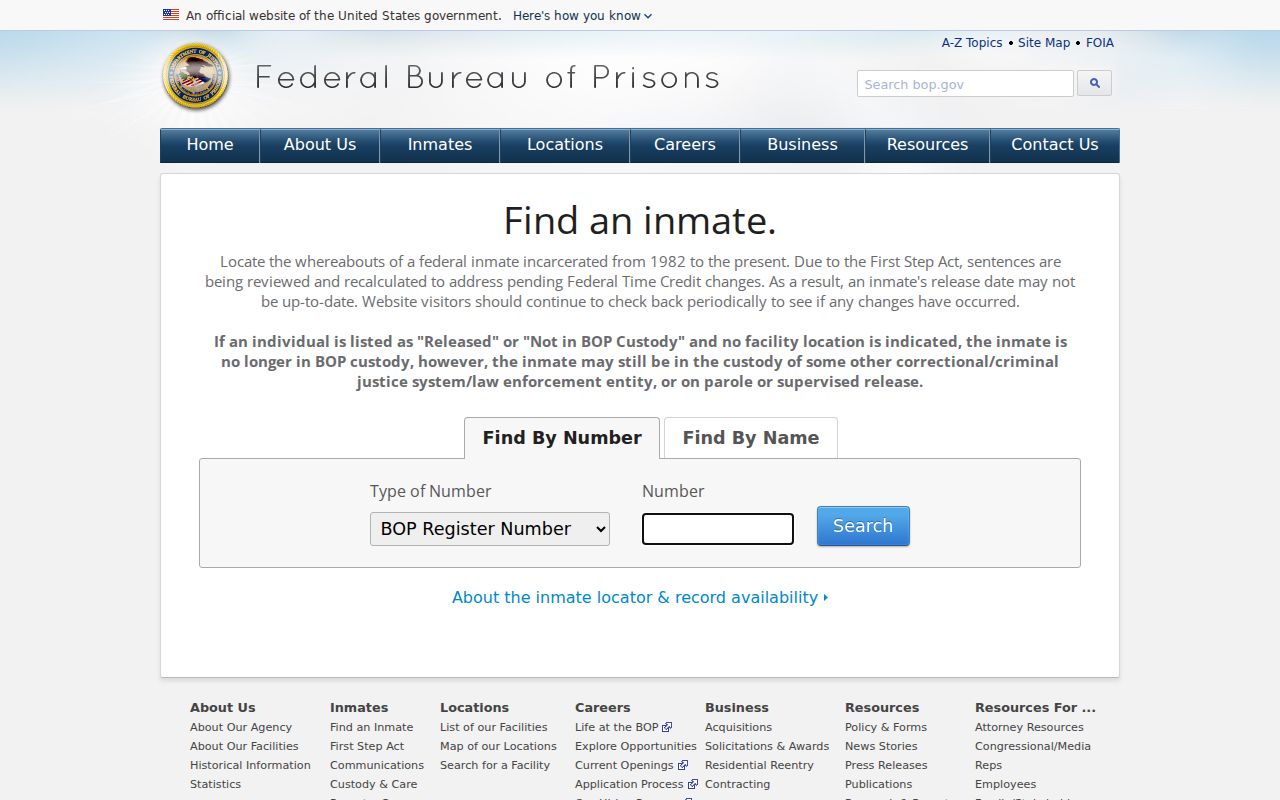
A blank Craven jail result does not rule out federal custody, transfer, release, or a case outside the county system.